



Subscribe
This is part two of our series on AI ethics, produced in collaboration with the McGill Laidley Centre for Business Ethics and Equity. Watch part one.
AI agents are increasingly capable of making their own decisions, often without human supervision. And their actions might conflict with what you consider moral or ethical behaviour.
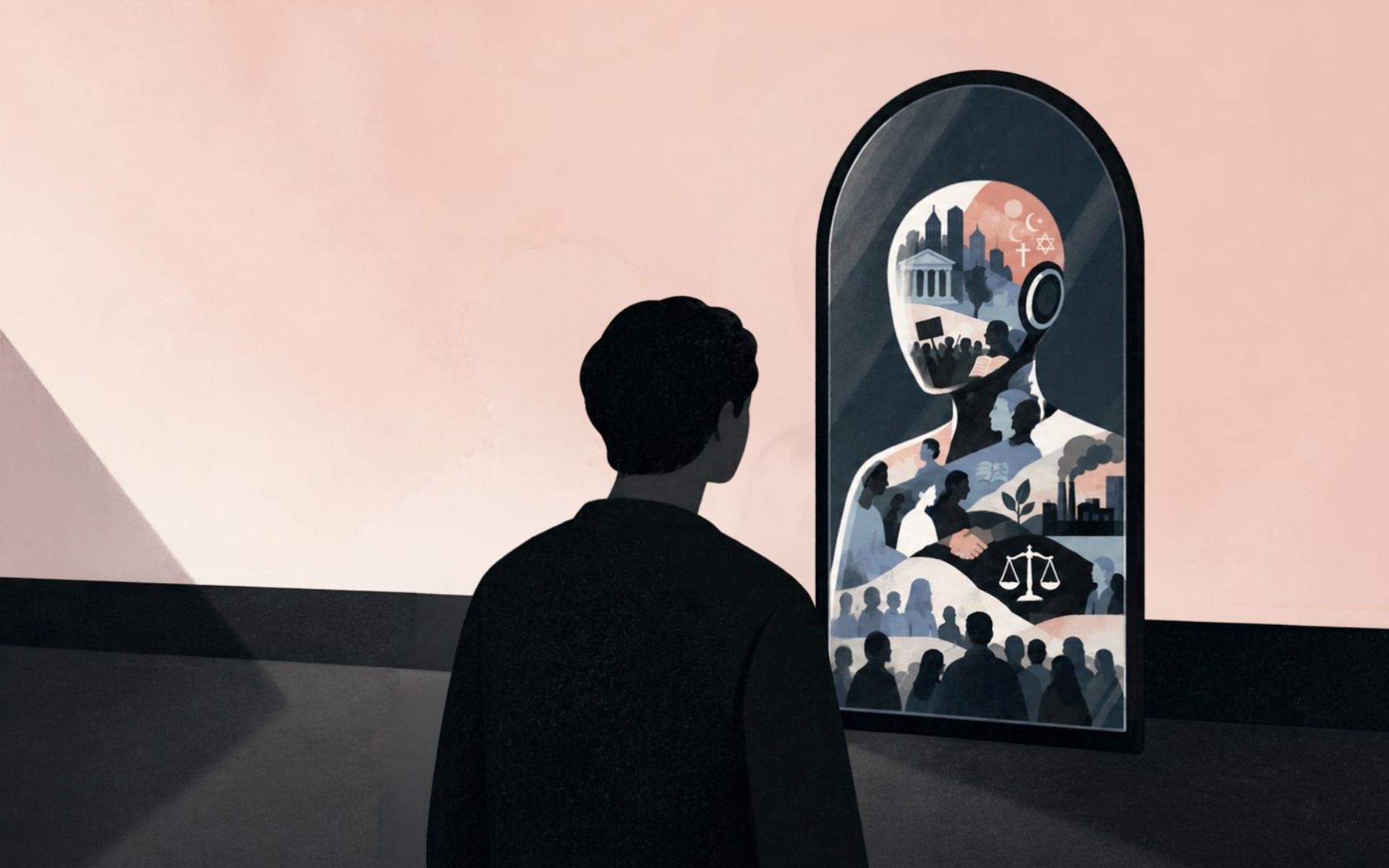
Some developers are trying to remedy this by aligning their AI models with human values. But when values fluctuate from person to person, which ones should AI uphold, exactly?
It’s a complex and profound question – one that lands squarely in the realm of moral philosophy, said Professor Lindsay Holmgren, director of the McGill Laidley Centre for Business Ethics and Equity. What constitutes “good” and “bad” has been the subject of ethical debate for thousands of years. And it’s a question everyone will have a different answer for. This makes codifying morals into AI an especially challenging task: any attempt to do so risks raising one set of morals above another.
But Warut Khern-am-nuai comes at the question from a different angle. He’s a professor of information systems at McGill University, and the director of the McGill Analytics, AI, and Advanced Digital Technologies Initiative.
“I view ethics as how different people are impacted by AI,” he said in a recent Delve podcast interview. “Especially for their long-term welfare.”
For him, ethical AI must account for human values, yes. But it must also account for the impacts of AI’s use upon implementation. Try as we might to encode universal human values into AI, they may produce unexpected outcomes when put into practice.
The CEOs of Anthropic, OpenAI, and SpaceXAI – the companies behind the most popular large language models like Claude and ChatGPT – recently called for a slowdown in AI development, citing safety and ethical concerns. Only a few weeks later, Anthropic filed for what could be the biggest initial public offer ever recorded. Meanwhile, many are left wondering whether AI is actually worth the risk.
Khern-am-nuai believes ethical AI is possible, but only if it’s carefully evaluated with each use case. Did it actually reduce hiring disparities at your company? Is it helping non-native English speakers communicate better in the workplace? Is it fairly distributing tasks based on ability?
We’ll know we’ve succeeded when AI achieves the ethical outcomes we set out for it.
Same technology, different outcomes
Khern-am-nuai’s perspective is rooted in his research, where he explores the impacts of AI in different environments. Many organizations now use AI to help with discretionary work, he said – tasks that require human judgement, such as reviewing resumes, approving loans, or scheduling operating room times. When companies use AI to make these decisions, the outcomes depend heavily on how the model is trained and deployed.
AI has been criticized in the past for perpetuating unfair biases in such use cases. But for Khern-am-nuai, this doesn’t mean AI is inherently immoral. Rather, it could mean the tool just hasn’t been sufficiently developed for that use case.
“There are different ways to impose ethics on AI,” he said.
And determining the right way requires understanding its outcomes in that environment.
In one study, Khern-am-nuai compared human and AI-predicted wages for freelancers across gender, location, and age. He observed no discrimination based on gender, but extreme differences based on location. For two identical freelancers, one from the US and one from the Philippines, the average AI -recommended wage was more than 50 percent lower for the Philippines-based worker. Workers from affluent regions consistently received higher AI-driven wages than equally qualified freelancers from lower-income regions, Khern-am-nuai said.
In this case, the AI helped reduce gender bias while creating discriminatory outcomes based on location. Now we can adjust the AI model to remove this oversight.
For Khern-am-nuai, ethical and fair use of AI starts with understanding its impacts in specific use cases, and adapting accordingly – rather than trying to create a universal set of values by which the AI must abide across situations.
Ethical AI is an opportunity
There is no one-size-fits-all rule for fairness when it comes to AI, or any technology for that matter, said Khern-am-nuai. Ethical AI can be understood as dependent on an organization, its employees, and its use case. Companies don’t need to settle the debate over AI ethics for everyone. But they do need to examine their own processes, the long-term outcomes they produce, and identify opportunities to address unfairness.
This kind of work can look more expensive in the short run. Business leaders frequently see it as an added cost due to the additional time and expertise needed to configure and test the AI tool, said Khern-am-nuai.
“But there are also benefits,” he said.
The long-term payoff is better outcomes for customers, employees, and the company as a whole. Ethical and fair AI use can lead to more motivated employees, and in some cases, increased profits, he said.
Ethical AI can also be a competitive advantage. A firm that doesn’t choose fair practices will eventually be penalized as its competitors do, said Khern-am-nuai.
“When you do it in a balanced way, economics and ethics can be both achieved at the same time,” he said.
Featured experts

Lindsay Holmgren
Director, McGill Laidley Centre for Business Ethics and Equity

Warut Khern-am-nuai
Professor, Information Systems, McGill University
Director, McGill AAAI
Written by
Eric Dicaire, Managing Editor, Delve
Edie Pearman, Content Assistant, Delve
The cover image for this article was generated using AI.