



Subscribe
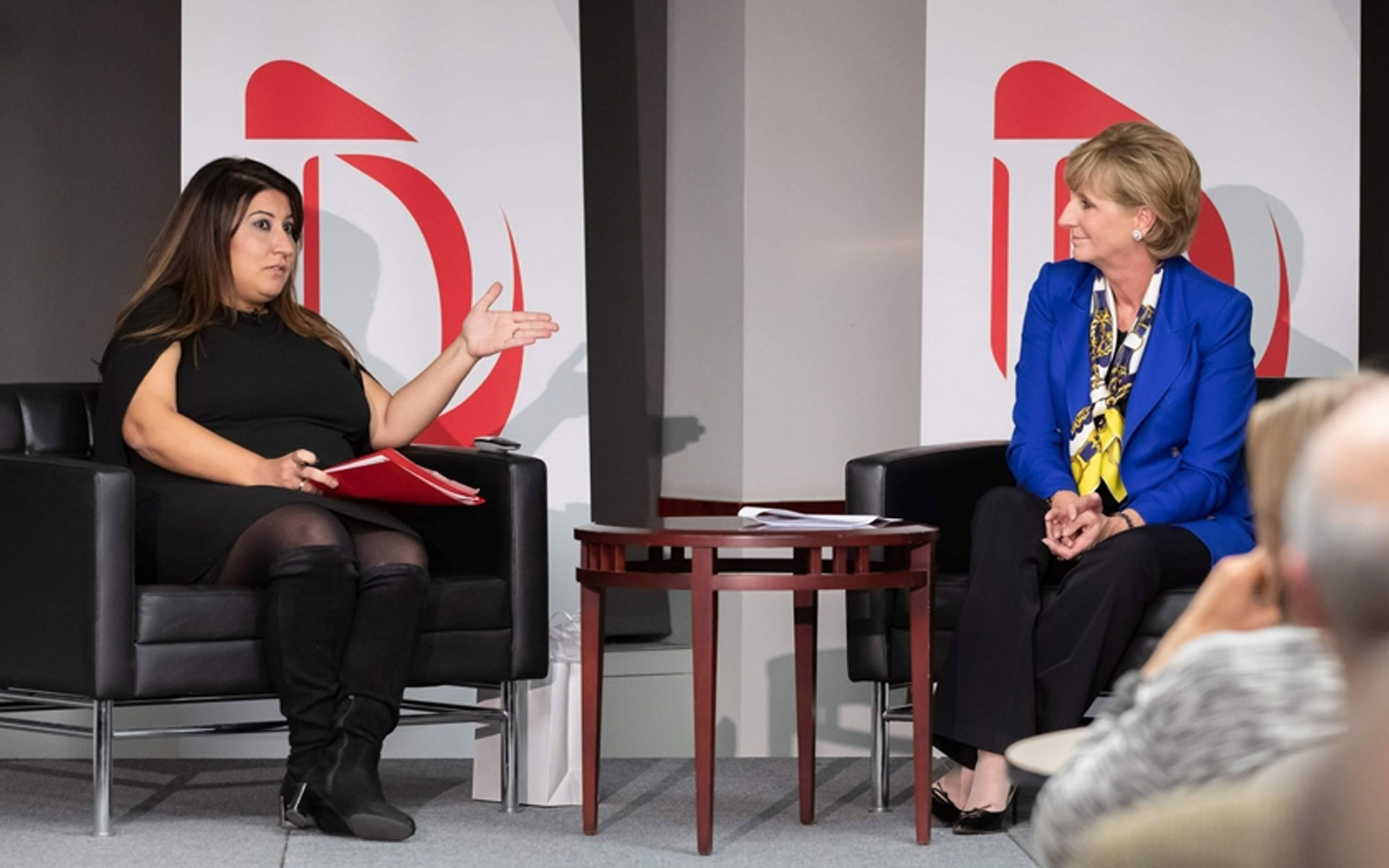
Note: this article covers only some of the points from Professor Ray’s interview with Delve. Watch the full conversation on YouTube or search “McGill Delve” in your favourite podcast player. He shares his views on everything from the COVID-19 response to Prime Minister Carney’s energy policy.
Saibal Ray, James McGill Professor in Operations Management, Vice-Dean of Faculty at the McGill Desautels Faculty of Management, has been researching risk for the better part of 40 years. He’s seen how a small ripple in our intensely interconnected supply chains can be felt everywhere.
Maybe you’ve felt it too. The 2008 financial crisis shook markets worldwide. Russia’s invasion of Ukraine around the world. The COVID-19 pandemic caused global mask shortages. Even now, conflict over the Strait of Hormuz is straining gas prices for everyone.
These once-in-a-generation events are beginning to feel common. In a podcast interview with McGill Delve, Ray theorizes why.
Global trade and efficient supply chains increased risk exposure for companies and governments alike. The number of global black swan events may not have changed in the last 100 years, but our interconnectedness means we feel each one more acutely.
Is it time to re-think how we organize our supply chains and manage risk?
The trade-off between efficiency and risk
An efficient supply chain moves product at the lowest cost, while minimizing waste and maximizing resource use. But the individual practices that support efficiency accumulate risk quickly.
“In some ways, efficiency and risk are opposite to each other,” Ray said.
If efficiency is the plan, risk is the chance that your plan goes wrong, he said.
Take two common practices of lean (efficient) supply chains: opting for a single supplier to simplify operations, and reducing inventory to free up capital. Both are great at cutting costs.
“But,” said Ray, “they increase risk significantly.”
Maybe a large storm grounds cargo planes from your single supplier. Maybe a pandemic causes a sudden surge in demand for your limited inventory of PPE masks. Maybe that same pandemic halts supply chain operations, full stop. Put together, Ray said, that same lean and efficient supply chain becomes one full of risk.
This overemphasis on efficiency is part of why the COVID-19 pandemic was so impactful, said Ray. Companies weren’t prepared for the surge in consumer demand for household goods and medical supplies.
Still, Ray doesn’t fault companies for this. The world hadn’t experienced a pandemic like this in over 100 years. Anyone who’d proposed back-stocking masks in anticipation would have likely received pushback.
The pandemic was a once-in-a-generation experience, or what can be called a black swan event: a severe, widespread adverse event considered near impossible to predict, its warning signs visible only in hindsight.
Some companies are looking to AI to better predict black swan events or similar disruptions. This can increase certainty for some operations. However, prediction can’t account for all risk, said Ray—because the nature of the risk itself also changing constantly
“We might have to start thinking about risk in a slightly different way,” he said.
The ripple effect of risk
Supply chains are more interconnected than ever. It isn’t the first time in history people have had access to goods from across the globe, but a disruption has rarely travelled as fast, or as far, as it does today.
“Because the global economy has become so connected, if there is a black swan event happening anywhere in the world, it impacts the whole world,” said Ray.
The frequency of these events hasn’t changed so much as the breadth of their impact. That breadth, it turns out, is the real risk – which we can see plainly in global commodities markets.
A global commodity is a good that has become highly standardized, universally traded, and has interchangeable producers. This includes energy markets like oil and natural gas; agricultural markets like grains, sugar, coffee, or livestock; and metal markets like gold and platinum. The price of these goods is set at the global level, unlike an ordinary grocery store orange. As a result, these commodities behave differently, incur risk differently, and can be seen as a risk to a supply chain in and of itself, said Ray.
Black swan events can drastically influence the price of global commodities. And this can have far-reaching downstream effects on all sorts of other products, amplifying the initial impact.
“Even if we are not impacted directly, we are impacted indirectly because of the price,” said Ray.
Canada, for instance, is self-sufficient in oil production. But as oil is priced globally, a disruption of a major supply route in the Middle East still raises prices everywhere. Someone buying gas in Quebec feels it all the same.
“When the global price rises, the price also rises at the pump here,” said Ray.
This risk becomes twofold when considering how that price fluctuation impacts other goods the commodity may contribute to, he said. Global commodities tend to be fundamental to the supply and manufacture of other goods.
Oil is necessary not only for the plastic packaging of many grocery items, but also for their expedient transport. Each of these dependencies is reflected in an item’s cost during an oil price hike such that the increase is compounded, said Ray. To the average consumer, it can feel like the price has jumped seemingly overnight for no clear reason. This is where risk relating to global commodities begins to propagate and spread quickly, said Ray.
The limits of local
This all sounds like an argument to localise supply chains. The less a country depends on global trade, the less exposed it is to global risk. For Ray, however, this isn’t a clear solution either.
In Canada’s case, harsh winters limit agricultural activity for several months each year. Its vast farmland produces considerable wheat and soybean crops, making them the, world’s ninth largest exporter of agri-food products. Yet a majority of the produce Canadian’s eat is grown elsewhere: on average 50 per cent of vegetables (excluding potatoes), and 75 per cent of fruits are imported. In Canada’s climate, local agriculture alone could not meet consumer demand year-round, said Ray.
Canada faces another limitation: a lack of high-tech manufacturing capacity. Nearly every electronic good, including AI systems, relies on semiconductors, and 68 per cent of them are manufactured in Taiwan. This concentrated yet limited supply makes the supply chain vulnerable to shortages and price hikes. Canada or any country able to manufacture their own chips can insulate themselves from the risk posed by this bottleneck.
However, semiconductor and related high-tech manufacturing is a capital-intensive highly specialized area that takes years to cultivate. In the 90s, Canada lost focus in manufacturing and mischaracterized it as a low value-added area, said Ray. Decades later, the country has little capability amidst escalating demand.
Eliminating this risk through local efforts is difficult, said Ray. Both provincially and federally, governments have already invested a great deal in building domestic battery manufacturing for electric vehicles. Almost all of these initiatives have been failures.
“We are trying to build manufacturing capability, but it is very difficult to build,” said Ray.
The country may be big in terms of land mass and resources, but not in terms of population. It just isn’t possible to have capability in everything, said Ray.
At least some degree of risk is inevitable. It’s a necessary cost of coordinating a system that feeds and supplies 8.3 billion people across 510 million square kilometres of space. For Ray, the goal was never to eliminate risk — it’s to find the balance.
Featured experts

Saibal Ray
James McGill Professor, Operations Management
Vice-Dean Faculty, Desautels Faculty of Management
Writers
Edie Pearman, Content Assistant, Delve
The cover image for this article was generated using AI.