



Subscribe
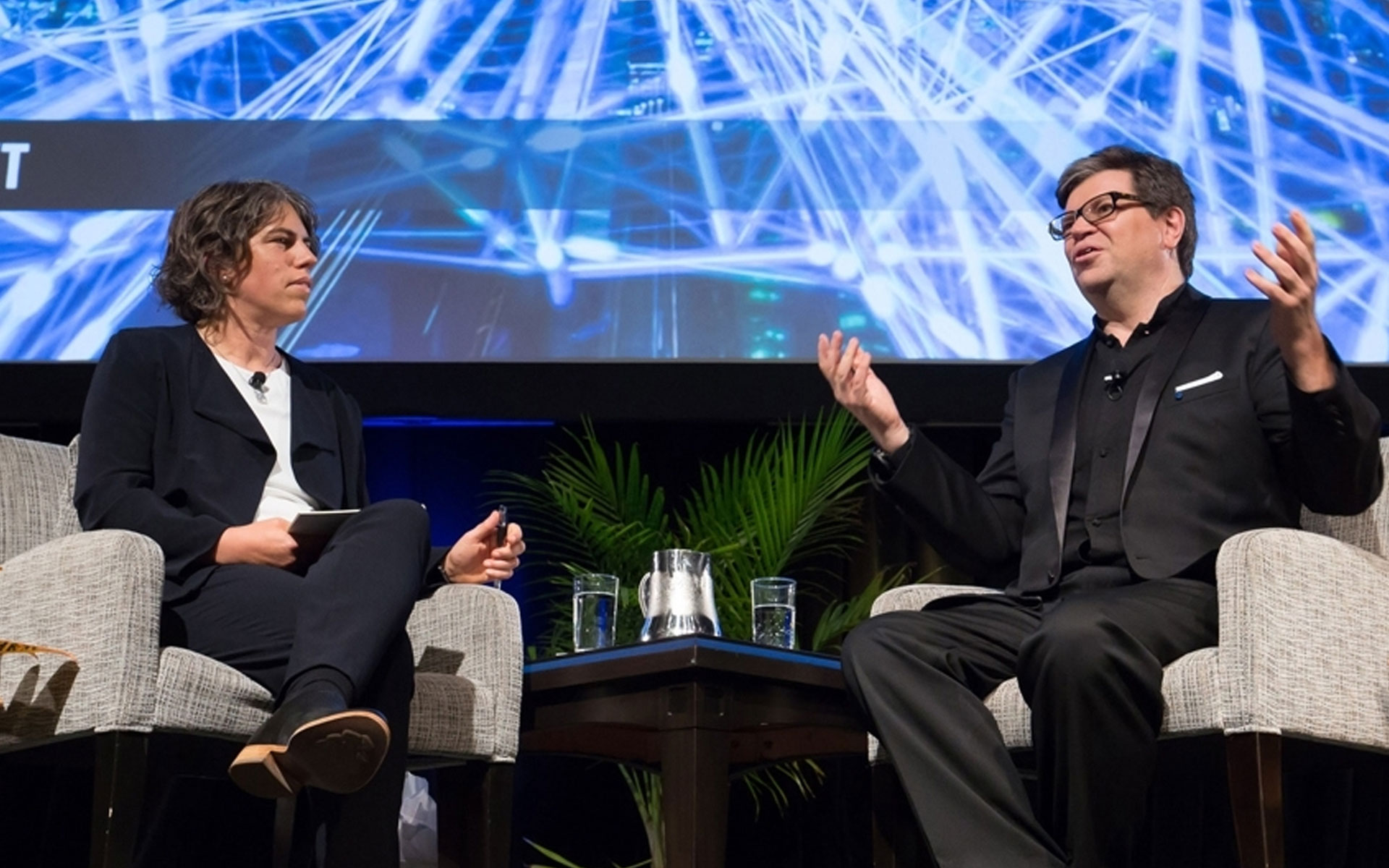
As professors and students increasingly use generative AI in their courses, will it enhance or harm learning? For Genevieve Basselier, Vice-Dean of Programs at the Desautels Faculty of Management, it depends on how it’s used. In our first-ever video podcast, she shares her thoughts with Delve’s editor-in-chief, Professor Saku Mantere.
When our parents were younger, classrooms were simple. Blackboards, chalk, pencils, paper, and a teacher lecturing at the front of the room. Eventually, blackboards became whiteboards, chalk became markers, and laptops, YouTube tutorials, and digital note-taking reshaped how students learned. Now, a new shift is underway: generative artificial intelligence (GenAI) and large language model (LLM) tools like ChatGPT have entered classrooms and lecture halls.
Each decade has introduced new supplemental tools. However, with the increasing supervised and unsupervised use of AI across educational sectors, we are forced to ask whether it enhances or harms critical thinking and learning.
According to Genevieve Bassellier, Associate Professor of Information Systems and Vice-Dean of Programs at the Desautels Faculty of Management, the answer isn’t about AI itself. Rather, it’s about how AI is being used.
“We want students to reach a higher level of learning by going through more metacognitive skills and making connections with prior knowledge that they have,” said Bassellier.
Thoughtfully designed GenAI tools can create personalized learning experiences that help close skill gaps between students from different backgrounds. But used incorrectly, it can dull core academic skills–likecritical reading, writing, and analytical thinking–which are at the heart of education across all levels.
On the McGill Delve podcast, Bassellier sat down with Saku Mantere, Professor of Strategy and Organisation at McGill University and Editor-in-Chief of Delve, to explore what AI could mean for the future of teaching.
How can AI help in the classroom?
AI remains a divisive issue in the education sector. While some educators and students share an optimistic outlook on AI, many others worry it may weaken ability to focus and study, lead to lower levels of emotional intelligence and interpersonal skills, or even create distrust between professors and learners.
Yet for Bassellier, GenAI is fundamentally just a tool, and like any tool, it can deepen learning or diminish it depending on how intentionally it is used.
“I think that students should, once they’ve written a text, have it improved by AI. But what matters is that they reflect on that,” said Bassellier. “They see what changes have been made. They have to agree to those changes. They have to understand. They have to be critical towards those changes.”
Rather than replacing foundational reading, writing, and thinking skills, GenAI can further enhance them through reflection. However, this can only happen if instructors build the right guardrails, and create clear outlines detailing expectations and instructions. GenAI can also address longstanding challenges in higher education: uneven baseline knowledge, limited instructor time, and large class sizes that make personalized support difficult.
“AI is a great opportunity to personalize a student’s learning,” Bassellier noted. “So when they do the learning, they can then ask questions to see the kind of connections they can make, and ask clarifying questions so they can take their learning from their level to a higher level.”
Below are the key ways Bassellier sees GenAI enhancing, rather than undermining, university learning.
Personalised learning support for diverse skill levels
University classrooms bring together students with vastly different backgrounds, with some students having never used Excel, or ESL students who may feel like they are at a disadvantage, while others arrive more prepared. AI tools can help instructors tailor practice problems, explanations, and pacing to each student’s level. Similarly, students can use AI tools to enhance their learning.
Strengthening reading and writing through reflection
Rather than eliminating reading and writing, AI can reinforce their importance. Students can draft responses, ask AI to improve the clarity or structure, and then reflect on the changes. This can help students identify gaps in understanding and strengthen their ability to question and critique texts.
Offering continuous, on-demand tutoring
Instructors can use AI ‘teaching assistants’ trained on course material to help students anytime they have questions, especially if students are studying after hours.
Enhancing instructor efficiency and course design
Teachers can create more varied classroom materials with help from AI in a shorter amount of time, than they would have been able to traditionally. More importantly, they can run lesson plans and materials by AI to ensure that the material is interesting and engaging for students with different base knowledge.
Embrace AI, but with caution
For Bassellier, the goal isn’t to avoid GenAI but to teach students how to use it responsibly: with reflection, skepticism, and a deep understanding of the fundamentals. AI can be a powerful accelerator for learning, but only when paired with strong literacy, critical thinking, and instructor oversight.
“If we don’t know how to read and write ourselves, it’s very, very hard to see when an AI has produced a text that actually makes sense,” said Bassellier. “That’s why it’s even more important that we continue to enforce the basic knowledge.”
GenAI may be the newest tool in the classroom, but the heart of learning remains the same: curiosity, effort, and the ability to think critically. If universities strike the right balance, AI could potentially help students learn more deeply, instructors teach more effectively, and classrooms become more equitable. But the technology cannot, and should not, replace foundational cognitive skills.
This article was written by Mahin Siddiki, Content Assistant, McGill Delve
Featured experts